Showing posts with label beneficial. Show all posts

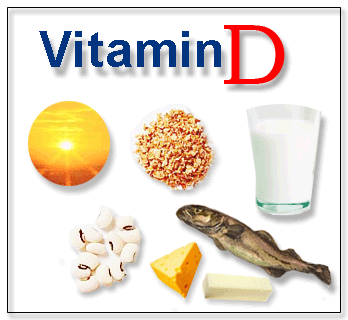
Vitamin D is necessary for everyone


As we know sunlight is an important source of vitamin D for our body. It is sufficient 15 to 25 minutes a day . We have to meet direct exposure only face ,hands and lower arms which is sufficient and complete deficiency of Vitamin D. Vitamin D deficiency may be decalcification of the bones , growth defects, muscular problems, heart and circulation issues and weaknesses in the body’s immune system . Our body is required around 80 percent of vitamin D for producing through the skin after exposure to ultraviolet B Light from the sun or artificial sources, although it also occurs naturally in a small range of food stuffs.

An appropriate diet as well as exposure to daylight Is important. Milk, mushrooms and avocados as well as fish such as salmon and mackerel which contain a lot of vitamin D. Children over one year above is five micrograms of vitamin D. This amount can be achieved through eating a 150 gram portion of fish per week, 250gram of mushrooms per day or 30gram of salmon and two glasses of milk.

Every one also may not get enough vitamin D through their diet. Milk is excellent source of vitamin D. But it is important to take direct exposure of sunlight during morning hours, so as to have appropriate absorption of vitamin D and Calcium. So we should take direct sunlight in morning hours or evening hours for absorption of Vitamin D.

Source

10 Health Benefits of Lemon Grass


Lemon grass, or tanglad, as it is called in the Philippines, is a tall perennial grass that is widely used in Asian cuisine. Its subtle citrus flavor makes it a favorite ingredient in a wide variety of food preparations like soups and curries. It goes well with poultry, fish, beef and seafood. Some countries also use it as tea.

In addition to its flavor- and aroma-enhancing properties, lemon grass also promotes good health.

Manganese – 175%
1. Helps prevent osteoporosis

Did you know that the trace mineral manganese is necessary for bone health? Study participants among postmenopausal women have shown that those who take a combination of calcium, zinc, copper and manganese have lesser spinal bone loss compared to those who didn’t.

2. Prevents PMS

Clinical studies among women suggest that an increased supply of manganese in their diets have resulted in fewer mood swings and cramps. Just one half cup of lemon grass can already supply almost 100% of the daily value (DV) of manganese.

3. Helps fight arthritis

Manganese may also be beneficial in individuals with rheumatoid arthritis. If taken along with glucosamine and chondroitin, some people have noticed lowered pain, although some find it to be ineffective.

4. Prevents anemia

Lemon grass is a very good source of iron, a mineral which helps prevent iron-deficiency anemia. If you notice frequent fatigue, weakness, and decreased ability to concentrate, add more lemon grass in your daily diet or increase your natural iron intake by eating more leafy greens and other iron-rich vegetables.

5. Helps prevent cough and colds

Another sign that you may need to up your iron supply is when you easily catch coughs and colds. Iron helps strengthen the immune system.

Potassium – 14%
6. Helps regulate blood pressure levels

Add your natural daily dose of potassium by making sure you have lemon grass readily available when cooking. Potassium has long been proven for its blood pressure-lowering-effects. Avocados, guavas, bananas and kiwifruits are some of the richest sources among fruits.

7. Prevents leg cramps

One cup of lemon grass is packed with half of the potassium in bananas. Potassium is also an electrolyte which relaxes muscles to prevent leg cramps.

Folate – 13%
8. Supports fertility

Lemon grass is beneficial for both men and women in their childbearing years though its supply of folate. This B vitamin (Vitamin B9) aids in spermatogenesis in men and implantation and placentation in women.

9. Prevents birth problems of the brain and spine

Folate also helps protect against serious congenital problems for the developing baby especially neural tube defects and spina bifida.

10. Lowers risk of cardiovascular diease

What makes lemon grass heart-friendly? Increased folate supply in the body has continually been suggested to lower risk of cardiovascular disease by preventing homocysteine build-up in the blood.

Lemon grass is also used extensively in herbal medicine.

Nutrient data source: USDA

Menu calorie counts 'beneficial'


Putting calorie information on menus encourages healthy eating - but only in a limited way, a review of the scheme in the US shows.

Researchers quizzed customers before and after a law was passed in New York in 2008 forcing restaurants to display the nutritional information.

The study by the NY Health Department showed one in six used the information - with most reducing their intake.

It comes as UK restaurants are introducing a similar scheme.

A total of 32 firms signed up to displaying calorie information in UK outlets, including fast food chains McDonald's and KFC, as part of the government's "responsibility deal" set out earlier this year.

The initiative saw a host of voluntary agreements established in the fields of alcohol, physical activity and health at work as well as food.

And the New York experience has suggested calorie information could have a benefit.

Researchers surveyed more than 7,000 people in 2007 and another 8,500 in 2009 at 168 locations covering 11 of the top food chains in the city, the British Medical Journal's website reported.

Some 15% reported using the labels and these customers purchased 106 fewer calories than customers who did not use or see them.

However, overall there was no significant change in average calorie consumption before and after as some people were consuming more calories in 2009.

This was partly explained by changing practices at some of the restaurants. For example, energy consumption increased by nearly a fifth at Subway where large portions were heavily promoted.

'Great example'
Researchers said it was important if the scheme was going to be more of a success that education campaigns be set up to improve awareness.

Dr Susan Jebb, a nutrition expert from the Medical Research Council, who has advised the government on its strategy, said she would expect calorie information to have more of an impact in the UK.

"We are much more used to looking at front-of-pack labelling in supermarkets so I would expect more people to use calorie information than the one in six in New York.

"But this study also illustrates the importance of how the restaurant or food chain acts. It is going to require a combination of factors to make a big difference."

A spokeswoman for the Department of Health said: "This is a great example of how calorie labelling can influence the choices people make and lead to a healthier diet."

Beatrice Brooke, of the British Heart Foundation, added: "One in six meals in the UK is eaten away from home so it's essential we know what's in the food we're buying in restaurants and cafes.

"The New York research shows us just how valuable calorie labelling in fast food restaurants can be.
Analysis

The research into how New Yorkers behaved after calorie information started being displayed on menus proves one thing - there is no silver bullet when it comes to changing behaviour.

Overall, consumption hardly changed after the law was introduced. That was partly because just one in six used the information at all.

Instead, the study suggests that the actions of industry can have much more influence.

One chain - Subway - saw calorie intake jump by nearly a fifth despite displaying calorie counts. The likely reason? It promoted large portions.

By contrast Au Bon Pain and KFC saw the biggest falls in energy consumption. But this was not wholly because customers were choosing to change their behaviour.

Instead, the two companies changed their menus and introduced healthier options. In fact, this may well prove to be the most significant consequence of putting calorie information on menus.

As it becomes clearer what is in the food we buy on the high street the food industry may feel compelled to offer healthier options.

Source : BBC.co.uk
 

About Me

My photo
Indonesia
I am a Indonesian citizen who hobby unique look for news on the internet and then pass it on to everyone through my blog. :) though still a beginner but I always try to give best to the visitors of my blog:)
Free Automatic Backlink daily Bookmarks Backlinks Builder Dofollow Backlinks Free Hundred Backlinks Free 100K Backlinks Backlinks Center Free SEO Backlinks Instant Backlinks SEO BookmarksWeb Link Exchange Text Backlink Exchanges Text Back Link Exchange Text Back Links Exchange Text Back Links ExchangesRP Backlink